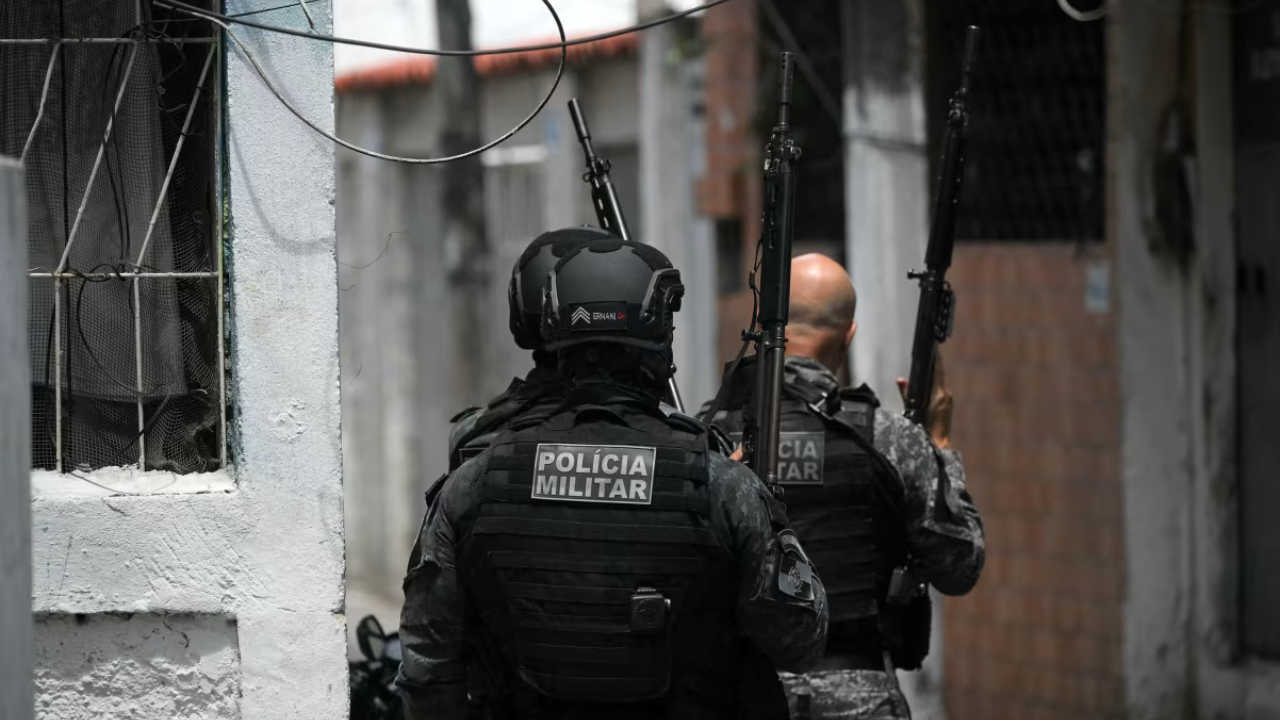
The “Operation Containment” raid in Rio’s favelas on October 28 sparked a heated national debate over Brazil’s approach to organized crime. Here is a summary of the arguments presented in the article for and against the operation:
Thank you for reading this post, don't forget to subscribe!Arguments Supporting the Raid (The “Necessary Operation” Stance)
Those who defended the operation, like Congressman Luiz Lima, framed it as a necessary and unavoidable act of self-defense and state control.
- Reasserting State Control: The raid was triggered by the Red Command’s (CV) expansion into new territories and the need for authorities to reassert control in areas the state had largely abandoned.
- Combating Daily Violence: Proponents argue that the high death toll is a grim part of Brazil’s reality. Lima stated that the 117 criminals killed in the operation is comparable to the high rate of homicides across the country (106 deaths a day), making the aggressive approach justified.
- Protecting Favela Residents: They insisted that the public, especially those living in the favelas, supported a tougher stance because residents are constantly extorted, and women are raped by traffickers, making life “unbearable.”
- Seizing Weapons and Drugs: Authorities confirmed the operation’s success by highlighting the seizure of a ton of drugs and 118 weapons, including 91 rifles and 14 explosive devices.
Arguments Criticizing the Raid (The Human Rights Stance)
Critics, including community organizers and human rights groups, argued that the operation was a failure, citing the devastating human cost and its counterproductive long-term effect.
- Excessive and Disproportionate Force: Human rights groups like Global Justice condemned the high death toll (at least 121 dead), calling it a “state policy that defines an entire population as disposable.” They argue that the state effectively executes “young, Black, poor residents” under the guise of public security, despite Brazil having no official death penalty.
- Perpetuating the Cycle of Violence: Critics believe this militarized approach is a “perpetual cycle of war” that ultimately strengthens the very criminal structures it aims to dismantle. As one expert noted, “Each operation kills dozens, but the leadership remains. For every man who dies, another fills the gap.”
- Lack of Lasting “Good”: Community organizers, like Thainã de Medeiros, expressed cynicism, stating, “It’s not the first time we see blood being spilled for a ‘greater good’… But this ‘good’ never comes.”
- Disruption of Community Services: The violence directly harms the residents and their quality of life, forcing the cancellation of essential community services, such as a planned partnership with UNICEF to help youth enter the job market.
Would you be interested in a summary of how the Red Command (CV) and the First Capital Command (PCC) evolved into rivals, or an overview of their shift to other criminal enterprises beyond drug trafficking?