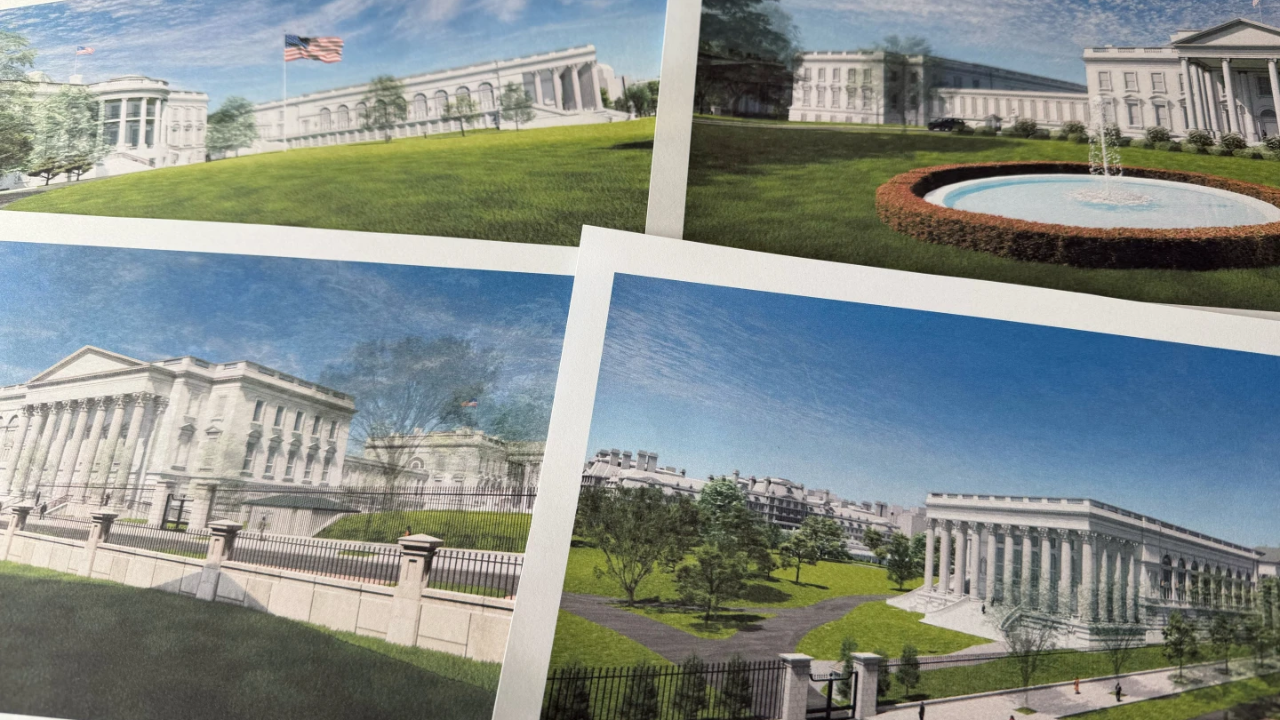
the U.S. Court of Appeals for the D.C. Circuit intervened in the ongoing legal battle over President Trump’s $400 million White House ballroom. The court ordered U.S. District Judge Richard Leon to re-evaluate his previous injunction that had halted work on the project.
Thank you for reading this post, don't forget to subscribe!The decision hinges on whether pausing construction creates significant national security risks that outweigh the legal concerns regarding the project’s authorization.
Security vs. Presidential Authority
The appeals court found that it currently lacks enough information to judge if stopping the project would endanger the President, his family, or staff.
- The Government’s Argument: The administration claims the 90,000-square-foot facility is more than just an event space. It is reportedly a “heavily fortified” structure featuring underground bomb shelters, military installations, and medical facilities designed to counter modern threats like drones and biohazards.
- The Initial Ruling: Judge Leon originally blocked construction on the grounds that the President did not have congressional approval for such a massive overhaul. He emphasized that the President acts as a “steward” of the White House, not its owner.
Current Legal Status
The court’s ruling has created a temporary window for the administration:
- Stay Extended: The injunction remains paused until April 17, 2026, allowing construction to continue for now.
- Judicial Split: The panel was divided 2-1. The majority wants Judge Leon to clarify if the ballroom’s “inseparable” security features make a construction halt impossible without risking safety.
- Dissenting View: Judge Neomi Rao argued the case should be dismissed entirely, questioning the right of preservationist groups to sue over the project in the first place.
Project Scope
This project follows the 2025 demolition of the East Wing. While the ballroom itself is reportedly funded through private donations, the extensive subterranean security infrastructure—the core of the current legal debate—is being financed by public funds.