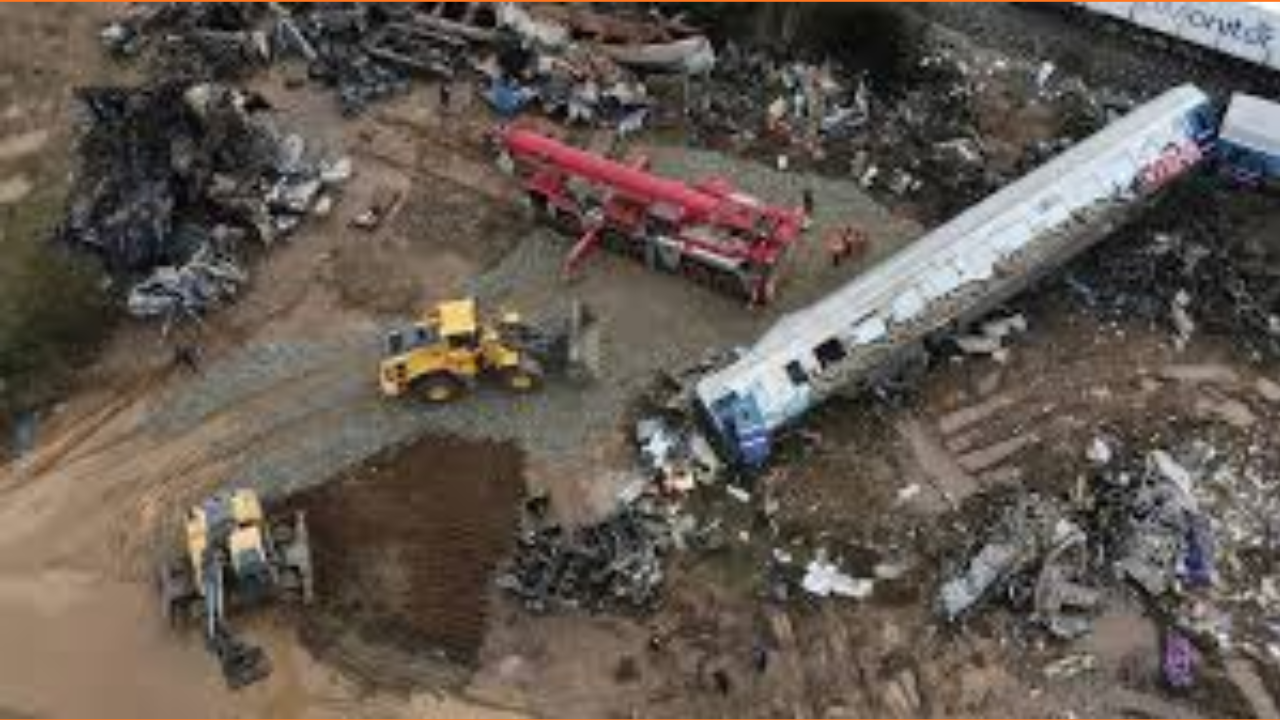
While Europe prides itself on a high-speed, eco-friendly rail network, a series of catastrophic failures over the last two decades serves as a somber reminder of the stakes involved in mass transit. From the hills of Galicia to the valleys of Greece, these incidents have reshaped safety regulations across the continent.
Thank you for reading this post, don't forget to subscribe!1. The Adamuz Tragedy (Spain, January 2026)
The most recent entry in this dark history occurred just yesterday. A high-speed train derailed near Adamuz, turning a routine journey into a scene of devastation.
- The Toll: 39 confirmed dead; 150 injured.
- The Context: Rescue teams are still working through the wreckage. While the cause is under investigation, the disaster has immediately reignited debates over the maintenance of high-speed corridors during extreme weather patterns.
2. The Tempi Head-On Collision (Greece, February 2023)
In what is widely considered the greatest tragedy in Greek transport history, a passenger train carrying over 350 people—many of them students returning from a holiday—collided head-on with a freight train.
- The Toll: 57 lives lost.
- The Failure: The two trains had been traveling on the same track for several kilometers. The disaster exposed years of systemic neglect, lack of automated signaling, and the immense pressure placed on a single stationmaster.
3. The Curve of Angrois (Spain, July 2013)
The Santiago de Compostela derailment remains one of the most haunting images of modern rail travel. An Alvia train approached a notorious curve at 179 km/h—more than double the speed limit—causing it to hurtle off the tracks and slam into a concrete wall.
- The Toll: 80 deaths.
- The Failure: A momentary lapse in driver concentration, combined with a lack of “fail-safe” braking systems on that specific stretch of track, proved fatal.
4. The Single-Track Error in Puglia (Italy, July 2016)
In the olive groves of southern Italy, two trains collided on a single-track line between Andria and Corato.
- The Toll: 31 deaths.
- The Failure: Investigation revealed an antiquated “telephone block” system. Because the line relied on manual coordination between stationmasters rather than digital sensors, a simple communication error allowed both trains onto the same stretch of track simultaneously.
5. The Morning Rush of Buizingen (Belgium, February 2010)
- The Toll: 19 deaths.
- The Failure: One train ignored a stop signal. This tragedy became the catalyst for Belgium’s “STOP” program, which saw the rapid-fire installation of automatic braking systems across their entire national network.
Lessons Learned: The Path to “Vision Zero”
Despite these tragedies, the European Union continues to move toward “Vision Zero”—a goal of zero fatalities on the rails by 2050. The primary weapon in this fight is the ERTMS (European Rail Traffic Management System).
How it works: ERTMS acts as a “digital supervisor.” If a driver misses a signal or exceeds a speed limit, the system overrides the controls and automatically applies the brakes, effectively removing the possibility of human error in many scenarios.
| Feature | Impact on Safety |
| Automatic Braking | Stops trains that pass red signals. |
| Speed Enforcement | Slows trains down for sharp curves automatically. |
| Real-time Tracking | Prevents two trains from ever occupying the same “block” of track. |