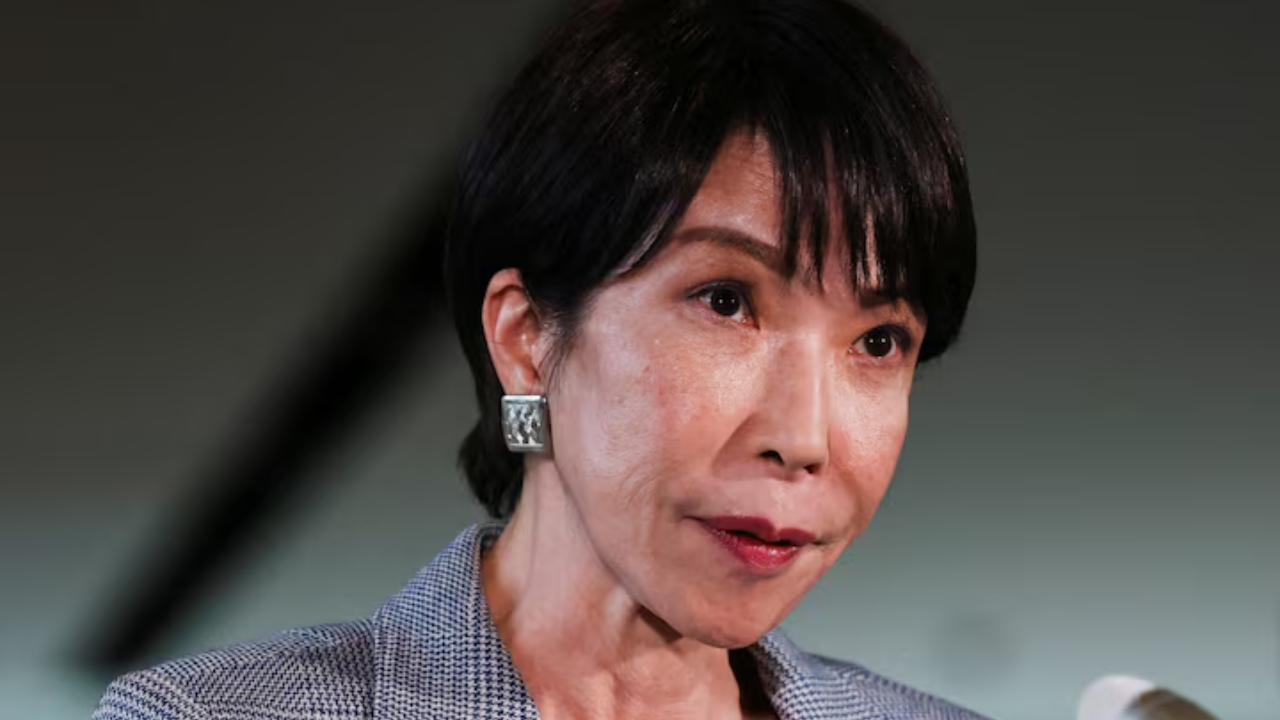
Japan Prime Minister Sanae Takaichi moved to calm volatile financial markets on Thursday, insisting that her administration’s upcoming draft budget maintains strict fiscal discipline despite its record-breaking scale.
Thank you for reading this post, don't forget to subscribe!The announcement comes as a response to growing investor anxiety over “Takaichinomics.” Fears of unbridled spending have recently pushed super-long government bond yields to record highs and placed significant downward pressure on the yen.
The FY2026 Budget at a Glance
The budget, set to be finalized this Friday and submitted to parliament in early 2026, reflects the administration’s attempt to bridge the gap between aggressive growth and fiscal responsibility.
- Total Expenditure: 122.3 trillion yen ($785.4 billion).
- Primary Objective: Balancing “proactive” strategic spending with long-term fiscal sustainability.
- Debt Strategy: Takaichi emphasized a commitment to limiting reliance on new debt to reassure bondholders.
“Strategic” vs. “Indiscriminate” Spending
Addressing the Keidanren (Japan’s most powerful business lobby), Takaichi clarified her economic philosophy. She argued that her “responsible, proactive” fiscal policy is built on strategic investment—prioritizing sectors with long-term growth potential—rather than simply inflating the budget’s scale for political optics.
“It does not mean expanding expenditures indiscriminately based solely on scale,” Takaichi told business leaders.
The Expert View: A Delicate Balancing Act
Market analysts remains cautious. Yusuke Matsuo, senior market economist at Mizuho Securities, noted that Takaichi faces a “double-bind”:
- Political Pressure: She must maintain high spending to satisfy her reflationist political base.
- Market Pressure: She must signal restraint to prevent a further sell-off in the Japanese Government Bond (JGB) market.
A Shift Toward Debt Reduction?
In a significant development at the Council on Economic and Fiscal Policy (CEFP), private-sector members—including known reflationists Masazumi Wakatabe and Toshihiro Nagahama—called for a more transparent roadmap. They urged the government to clearly demonstrate how it intends to reduce Japan’s debt-to-GDP ratio over time, signaling a potential pivot toward more traditional fiscal metrics to regain international trust.