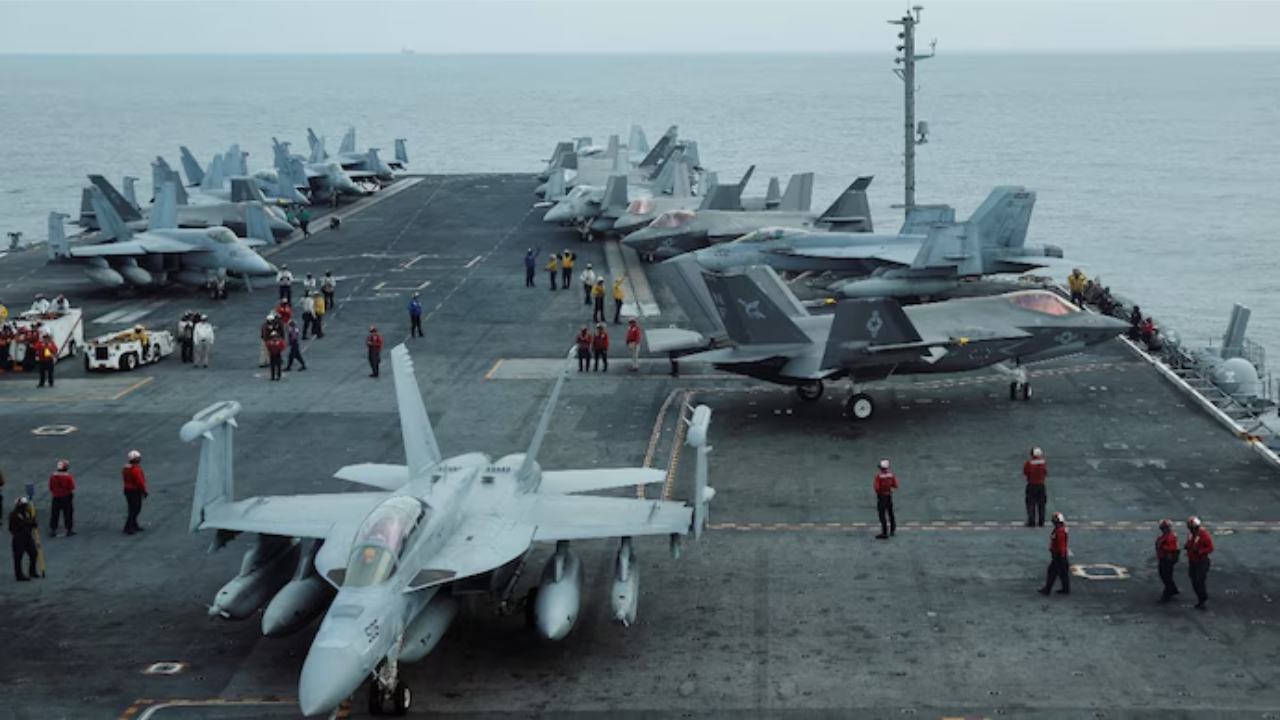
Washington is rapidly accelerating its security footprint in the Indo-Pacific, deploying a “cash and cannons” strategy to counter Beijing’s growing influence. By unveiling multi-billion-dollar arms packages for Taiwan and the Philippines, the United States is signaling that it will no longer settle for a passive presence in the South China Sea.
Thank you for reading this post, don't forget to subscribe!1. Strengthening the “First Island Chain”
The recent surge in funding marks a pivot from general military cooperation to a focused “Asymmetric Deterrence” strategy.
- Taiwan: Historic aid packages are being used to transform the island into a “porcupine”—an entity so bristling with weaponry (such as HIMARS and mobile drone units) that a Chinese invasion would be prohibitively expensive.
- The Philippines: Heightened tensions over maritime territory have pushed Manila closer to Washington. New funding is aimed at modernizing the Philippine Coast Guard and expanding U.S. access to strategic bases facing the South China Sea.
- The Japan Factor: A recent flare-up between Tokyo and Beijing over Taiwan has unified the U.S.-Japan-Taiwan security axis, creating a more cohesive front against Chinese naval expansion.
2. India: The Indo-Pacific’s “Key Strategic Partner”
A defining shift in the U.S. National Security Strategy is the explicit elevation of India. By naming New Delhi a “key strategic partner,” the Trump administration is integrating India into a broader web of containment.
| The U.S. Objective | The Impact on India |
| Counter-Weighting China | India gains access to cutting-edge U.S. technology and intelligence to monitor its own borders. |
| Securing Trade Routes | Deepened commercial ties with the U.S. position India as a viable manufacturing alternative to China. |
| Maritime Leadership | The U.S. is encouraging India to be the “net security provider” in the Indian Ocean, stretching China’s military focus thin. |
3. A Tightening Grip on Beijing
The administration’s strategy is clear: encirclement through alliances. By arming China’s rivals, the U.S. is forcing Beijing to navigate a landscape where its neighbors are no longer just diplomatic obstacles, but militarized deterrents.
For India, this “tightening grip” offers a unique opportunity to modernize its military and assert dominance in the Indian Ocean. However, it also places New Delhi at the center of a high-stakes geopolitical rivalry, requiring a delicate balance between its “strategic autonomy” and its deepening alliance with the West.
The Bottom Line
The billions in cash and weapons flowing into the region are more than just trade deals; they are the building blocks of a new security architecture. As the U.S. reinforces the Philippines, Taiwan, and Japan, it views India as the indispensable anchor that will prevent China from achieving regional hegemony.