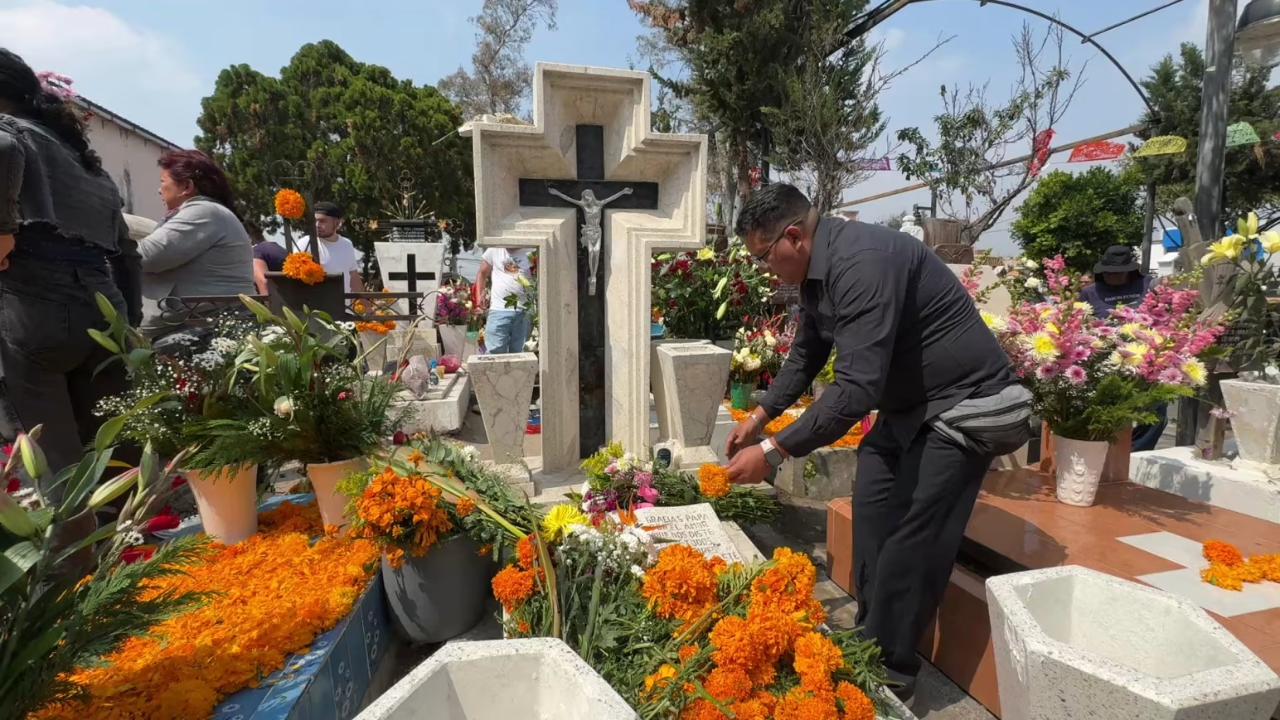
The ancient traditions of Día de los Muertos (Day of the Dead) thrive in San Andrés Mixquic, a small town near Mexico City, where the boundary between the living and the dead dissolves for two days every November.
Thank you for reading this post, don't forget to subscribe!The Journey Home
Following ancient Mexican tradition, the door between worlds opens on November 1st and 2nd. The souls of the departed, like Ángel Jiménez del Aguila, are guided back to their homes by a sensory path:
- A bright trail of marigold petals.
- The scent of smoldering copal incense.
- The rhythm of danzón music.
This annual commemoration is a complex holiday, encompassing a festival of remembrance, a celebration of Mexican identity, and an ancient ritual with roots in the Aztec Empire and a later blend with the Christian All Saint’s Day. As Ángel’s daughter, Martha, describes it, Día de los Muertos is “a magical moment where life and death come together.”
The Heart of the Ritual: The Ofrenda
Upon arrival, the souls are welcomed to an ofrenda, or altar. Martha Jiménez Bernal prepares her family’s altar with deep care and personal connection, gathering flowers from their family’s chinampa (a traditional floating garden). The altar is loaded with gifts for the deceased:
- Marigolds and colorful cloth.
- Fruit, candy skulls, and photos of loved ones.
- Pan de Muertos (sweet bread).
The family kneels before the altar, burning copal and speaking directly to their loved ones, welcoming them home in a deeply emotional act of love and faith. The observance unfolds over three days: October 31st for children’s souls, November 1st for adults, and the third day for a collective farewell at the cemetery.
History and Evolution
Historians note that the modern celebration is a powerful mix. While Spanish monks adapted the indigenous Aztec traditions to the European calendar in the 16th century, the most prominent features today, like the marigolds and the visual representation of the dead, are rooted in indigenous elements.
However, the holiday is also evolving:
- A large Mexico City Day of the Dead parade was recently adopted after being featured in the 2015 James Bond film, Spectre.
- Even in traditional Mixquic, some modern Halloween-style costumes have appeared, though local families maintain their intimate rituals.
Despite these changes, for families like the Jiménez, the holiday remains a profound inheritance—a lesson that “death is a transition, it is not a punishment,” and a vital practice of gratitude toward their ancestors.
Would you be interested in learning more about the cultural significance of the marigold flower in the Day of the Dead tradition?