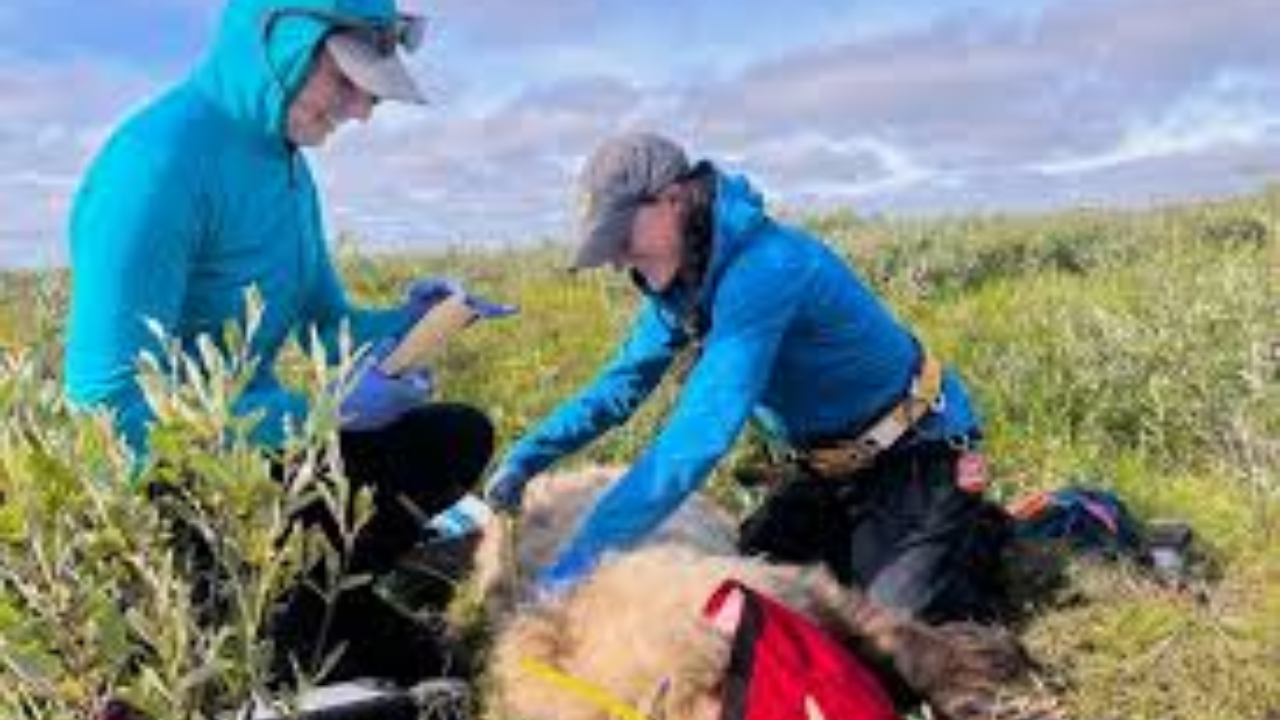
The “Whiskery Muzzle” Perspective
The footage offers a rare, shaky-cam look at the world from a bear’s chin. These “Vertex Plus” collars aren’t just for show; they capture the raw reality of Arctic life that humans rarely see.
- The Diet Pivot: The cameras confirmed a seasonal shift in menu items. In the early spring, it’s all about “scavenge and hunt,” targeting caribou carcasses and calves. By late summer, the bears become massive “vacuum cleaners,” consuming thousands of blueberries and soapberries to prepare for hibernation.
- A Softer Side: While we view them as solitary killing machines, the footage revealed surprising moments of social play between adults, suggesting their social structures are more complex than previously thought.
- The Long Sleep: Because the North Slope is so resource-poor, these bears spend up to 8 months in dens—longer than almost any other grizzly population.
Why This Research Matters
The North Slope is changing. As the Arctic warms, the timing of “green-up” and the availability of prey like musk oxen are shifting. By watching these bears navigate oil pipelines and highways, scientists can:
- Map Migration: See exactly how human infrastructure affects bear travel.
- Predict Survival: Understand if the bears can adapt their diet as the climate shifts.
- Prevent Conflict: Identify high-risk areas where bears and workers are likely to cross paths.
Fun Fact: These “Barren Ground” grizzlies are much smaller than their coastal cousins. Without a steady supply of salmon, a North Slope male might weigh only half as much as a Katmai giant.