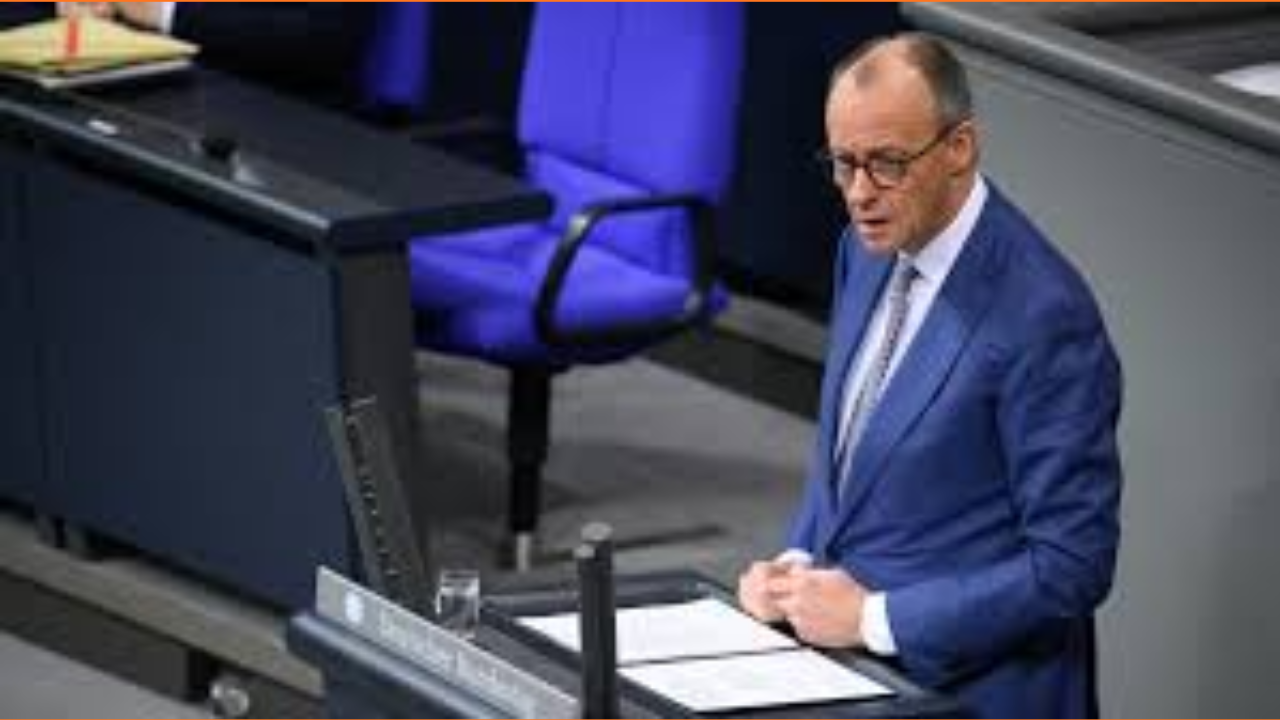
In a landmark address to the Bundestag on January 29, 2026, German Chancellor Friedrich Merz positioned the European Union as the world’s premier “normative alternative” to the rising tide of global autocracy and neo-imperialism.
Thank you for reading this post, don't forget to subscribe!The speech marks a definitive pivot in German foreign policy, moving away from passive diplomacy toward a more assertive, value-driven stance on the world stage.
1. A Rejection of “Brute Power”
Merz argued that while global rivals increasingly rely on “arbitrariness” and military posturing, Europe must remain anchored in:
- The Rule of Law: Mutual respect over transactional threats.
- Reliability: Maintaining long-term alliances rather than erratic policy shifts.
- Economic Sovereignty: Reducing “one-sided dependencies” on both Chinese manufacturing and American tech.
2. Recalibrating the Transatlantic Bond
The Chancellor addressed the “elephant in the room”—strained relations with Washington. While reaffirming Germany’s commitment to NATO, Merz was blunt about the terms of the relationship:
- Equality, Not Subservience: Germany views itself as a “partner, not a subordinate” to the U.S.
- Defending the Past: He issued a firm rebuke to President Trump’s recent criticism of NATO’s history in Afghanistan, honoring the sacrifice of German troops as a commitment to international stability that must not be “demeaned.”
3. Learning the “Language of Power”
- Develop a credible, independent security architecture.
- Leverage its massive internal market as a diplomatic tool.
- Build a “Coalition of Reason” with democratic partners like India to balance the influence of the U.S. and China.
Bottom Line: Merz is effectively pitching Europe as the “adult in the room”—a stable, predictable power center in an increasingly volatile 2026.